A History of Coffee
From a shade plant in the Ethiopian forest to a traceable single lot — twelve centuries of a seed that kept rearranging the world around itself.
Origins
The Coffeehouse
Plantation
The Waves
The Plant
Fire and Water
Why It Tastes
Scroll ↓
Origins
Coffee begins as a fruit, not a drink. The seed inside the cherry is the part we now roast — but for centuries the pulp, the leaf and the husk mattered more.
01Coffea arabica grows wild in the forest understorey of southwestern Ethiopia, a shade plant that fruits into bright red cherries. The earliest uses were closer to food and medicine than to a hot drink: the cherry chewed, the leaf steeped, the husk boiled.
Across the Red Sea in Yemen, that changed. By the fifteenth century Sufi communities were roasting and grinding the seed deliberately, brewing qahwa to hold off sleep through long night prayer. Coffee arrives in history as a devotional technology.
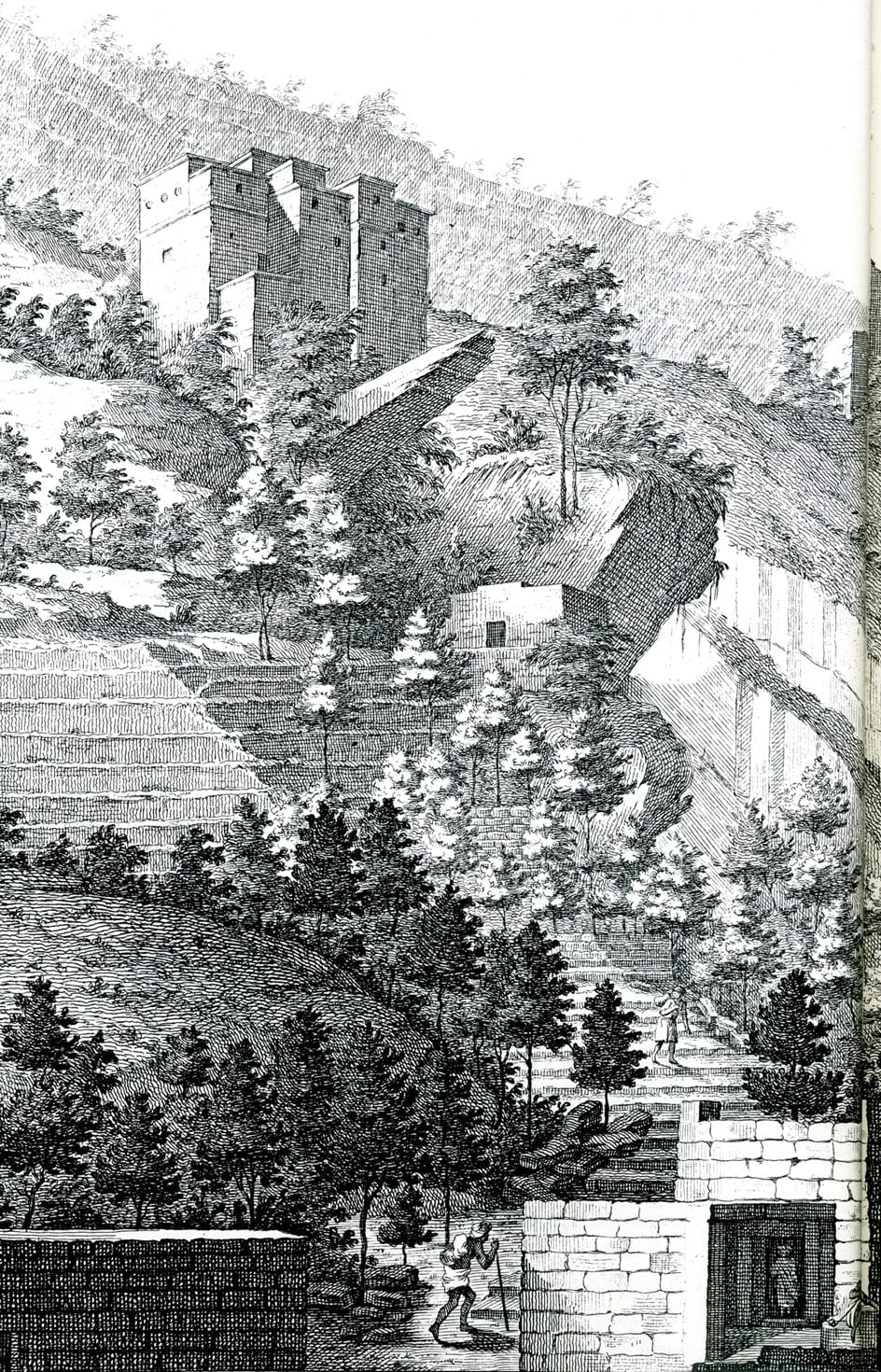
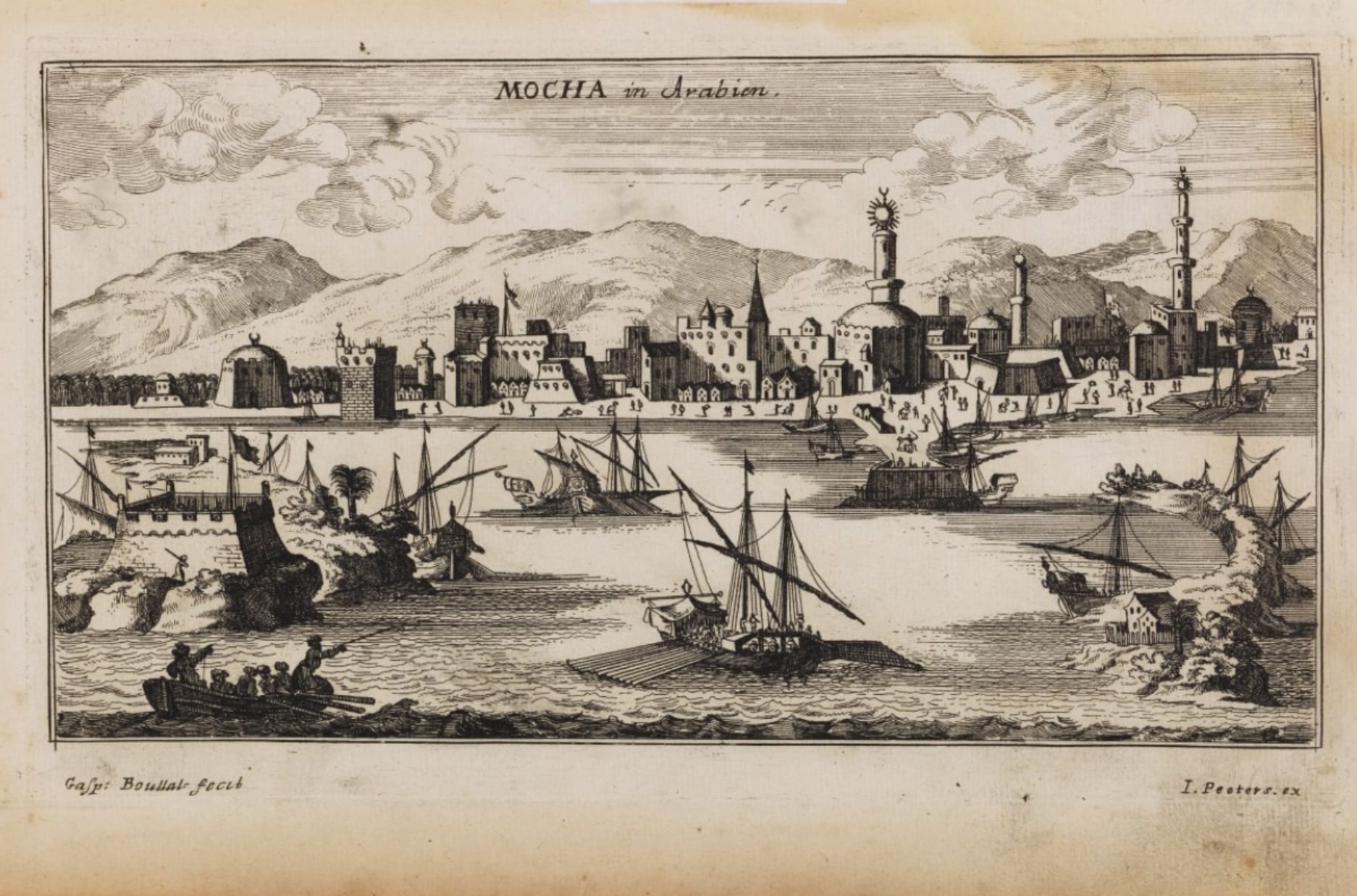
Yemen's terraced hillsides became the first place coffee was farmed rather than gathered, and for roughly two hundred years the port of Mocha was the only door through which it left.
Coffee arrives in history as a devotional technology.
The Coffeehouse
The drink travelled, but the room travelled further. Wherever coffee went it built the same institution: a public space where strangers sat, read, argued and stayed sober.
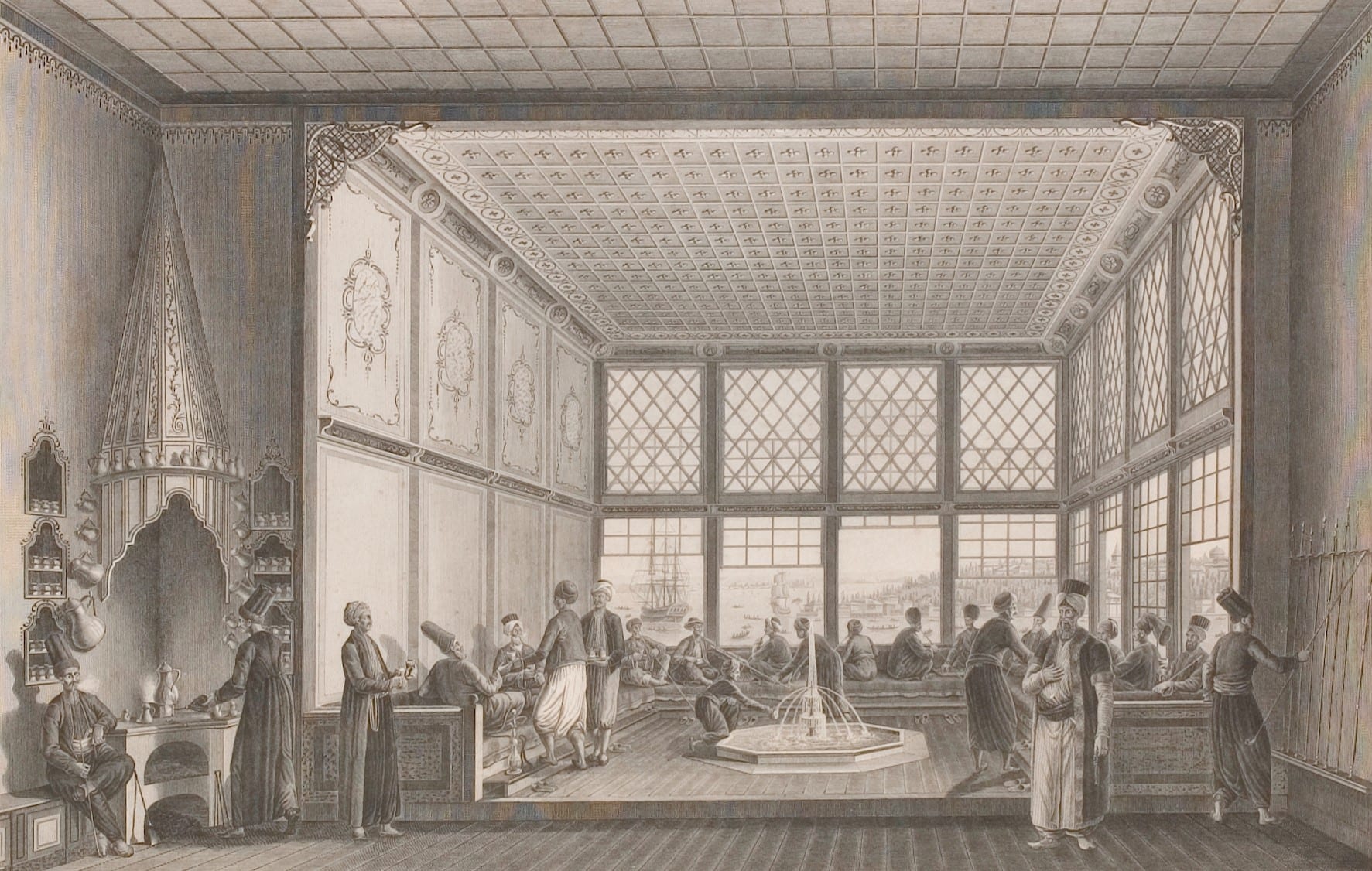
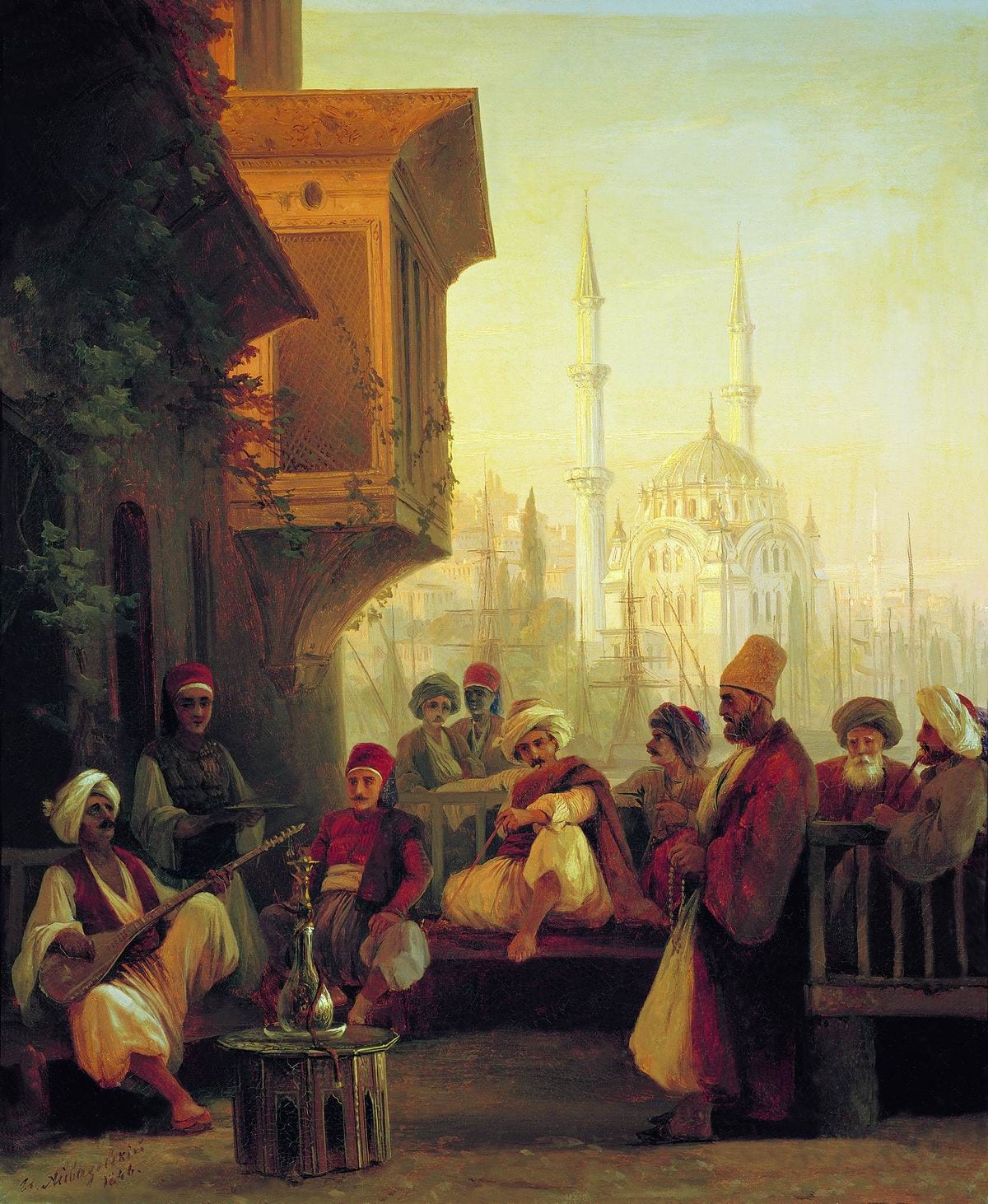
01Coffeehouses opened in Mecca and Cairo, then in Constantinople by the 1550s. They were immediately controversial — repeatedly restricted and reopened, because a venue where men gathered to talk without drinking was harder for authorities to read than a tavern.
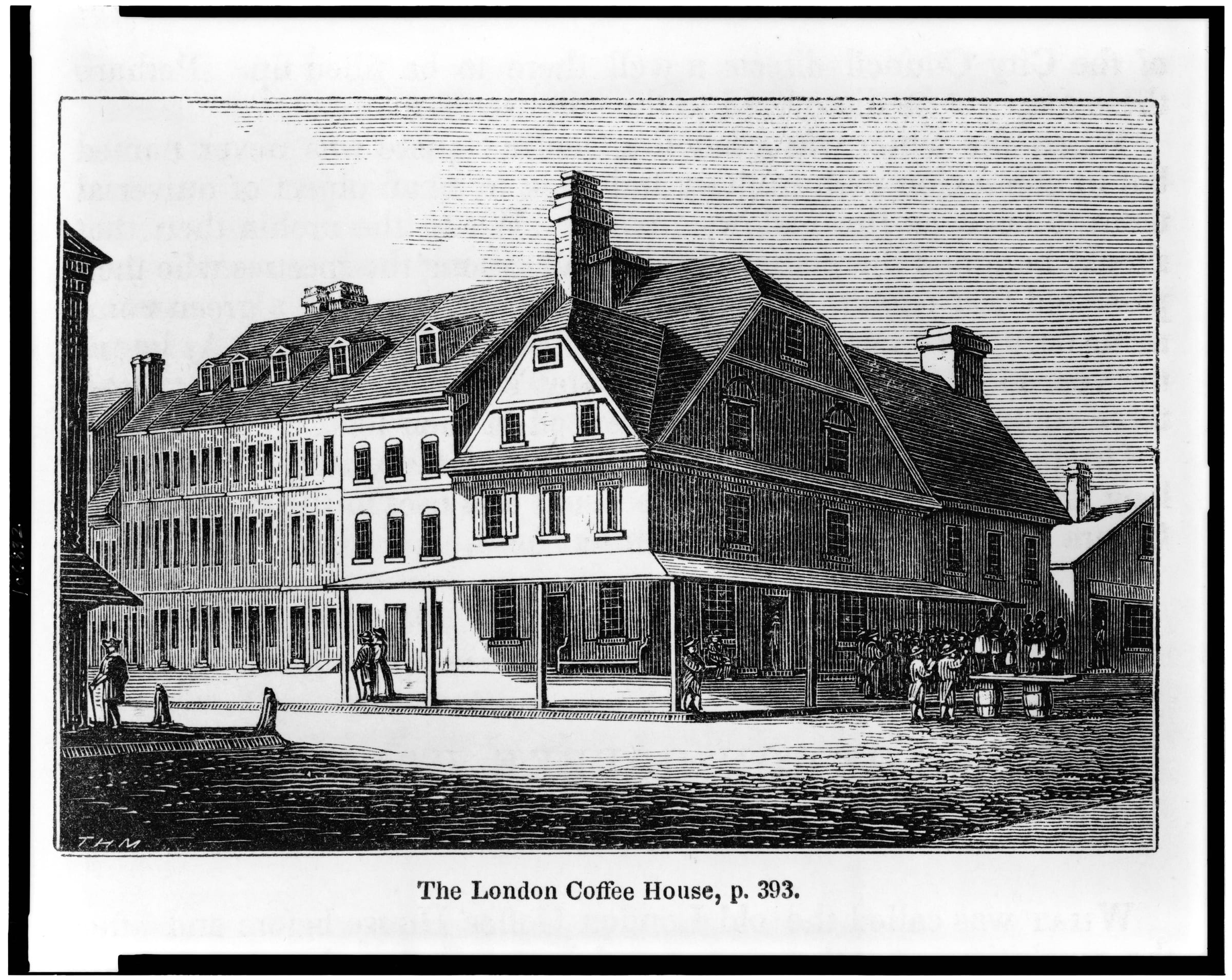
The model reached Europe in the seventeenth century: Venice, then Oxford, then London in 1652. Within decades London had hundreds, each with its own clientele — shipping, insurance, science, dissent. Lloyd's began as a coffeehouse; so, in effect, did the stock exchange.
What spread was never only a beverage. It was a format for public life, and it arrived pre-loaded with the habit of reading the news aloud.
What spread was never only a beverage. It was a format for public life.
Plantation
Demand outgrew Yemen. Meeting it meant moving the plant into colonial systems built on forced labour — the part of coffee's history that the cup does not disclose.
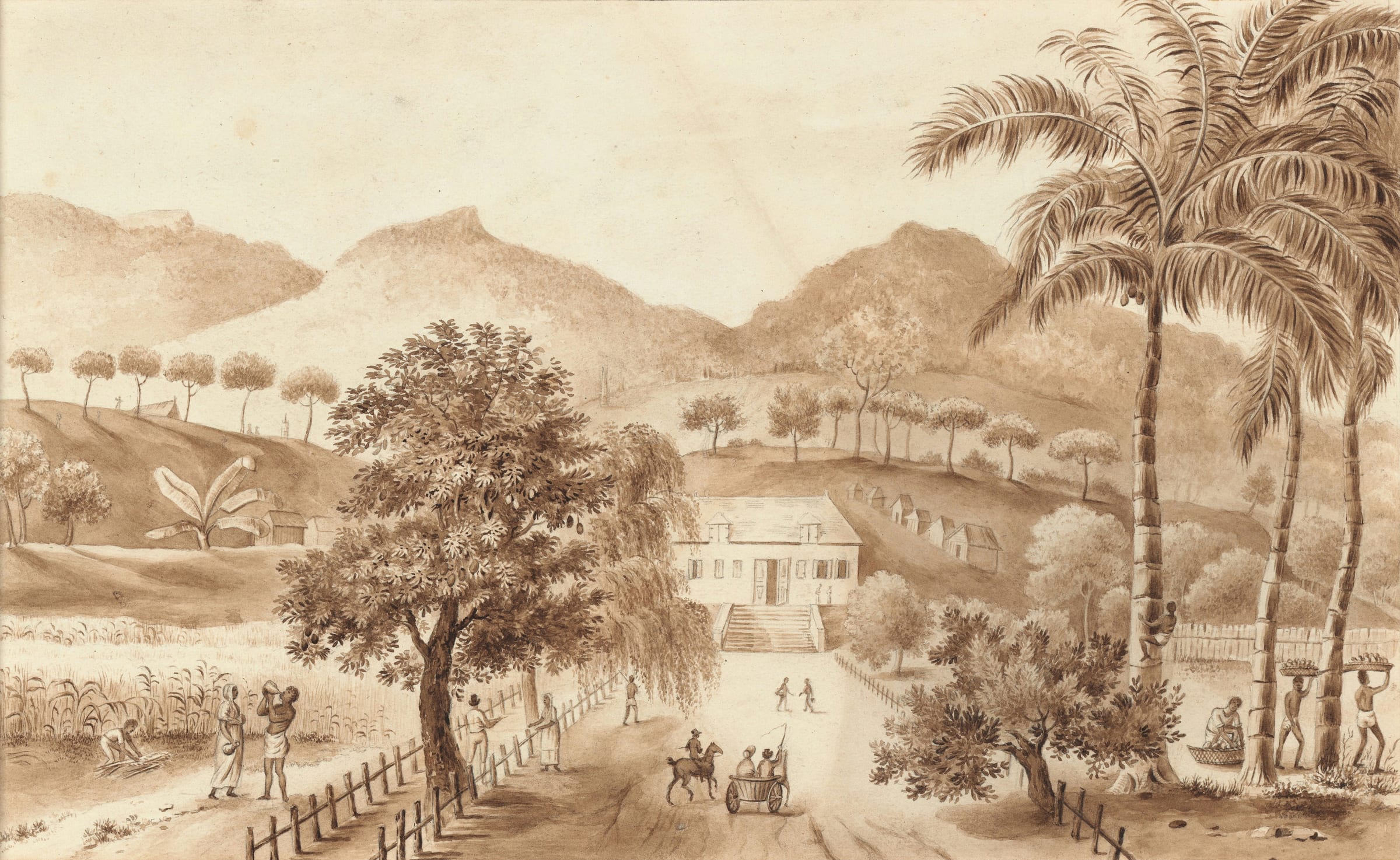
01Seedlings smuggled out of Yemen reached Java, then Réunion, then the Caribbean in the 1720s. Each transfer put coffee into a plantation economy: cleared land, enslaved workers, and export volumes no smallholding could match.
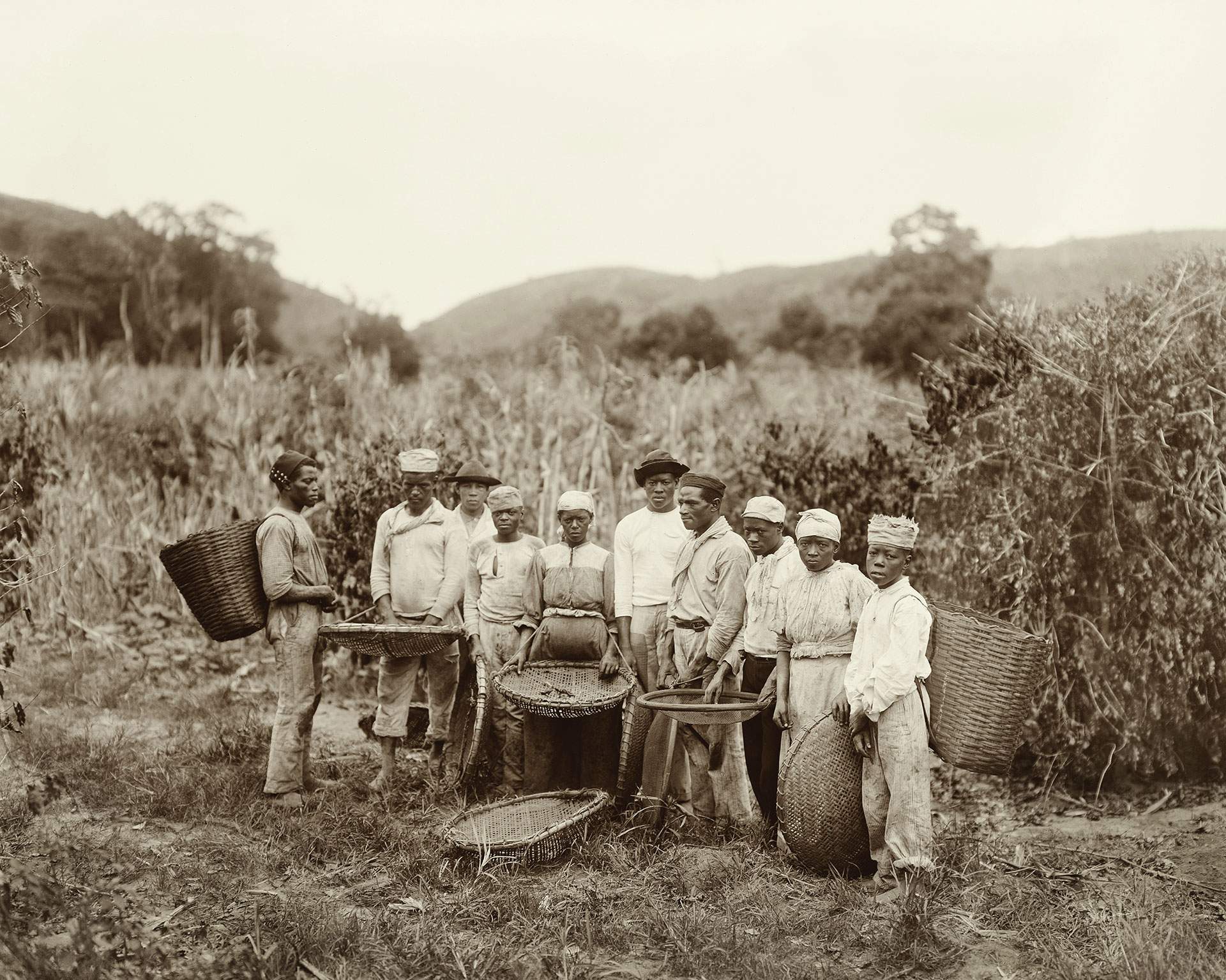
Brazil became the centre of it. By the nineteenth century Brazilian coffee was grown at enormous scale on the labour of enslaved Africans, and the country supplied the majority of the world's coffee — a position it has not since lost.
The cheapness of coffee in Europe and North America was manufactured. It was the direct output of coerced labour, and abolition in Brazil in 1888 came only after coffee had already reshaped the Atlantic economy around itself.
The cheapness of coffee was manufactured, not discovered.
The Waves
The last century industrialised coffee, then spent its final decades trying to undo that — recovering origin, varietal and roast as things worth knowing about again.
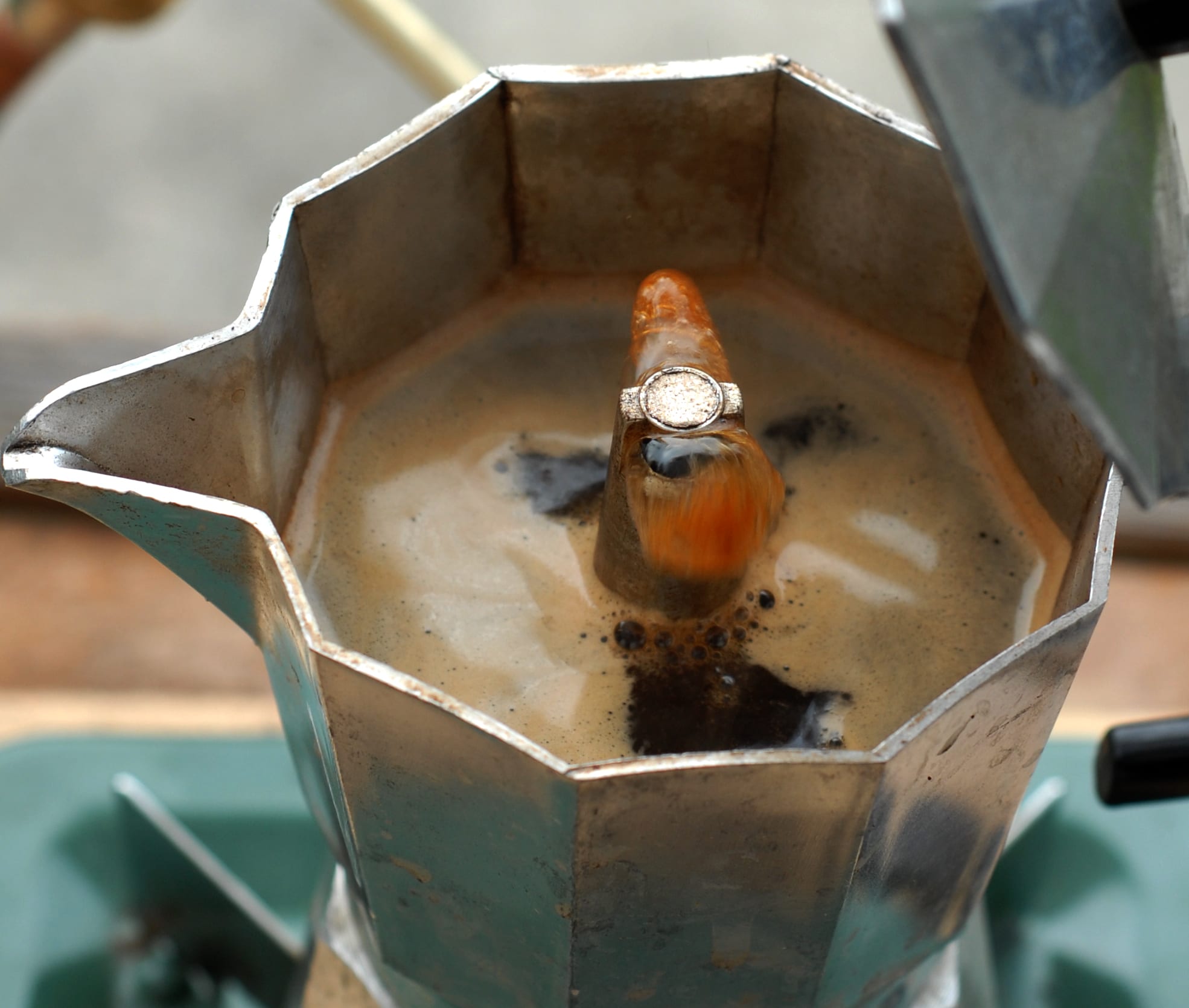
01Espresso pressure machines, the moka pot, and freeze-dried instant made coffee fast, portable and consistent. Consistency was the achievement and also the cost: by mid-century most coffee was a commodity blend, dark-roasted to a uniform flavour.
The second wave sold the café back as an experience. The third wave went after the coffee itself — single origin, named farms, traceable lots, lighter roasts that let a varietal taste like where it grew.
The through-line is unchanged since Yemen. A seed is picked, dried, roasted, ground and brewed with hot water; every wave is an argument about how much of the seed to take, and how fast.
Every method is an argument about extraction.
The Plant
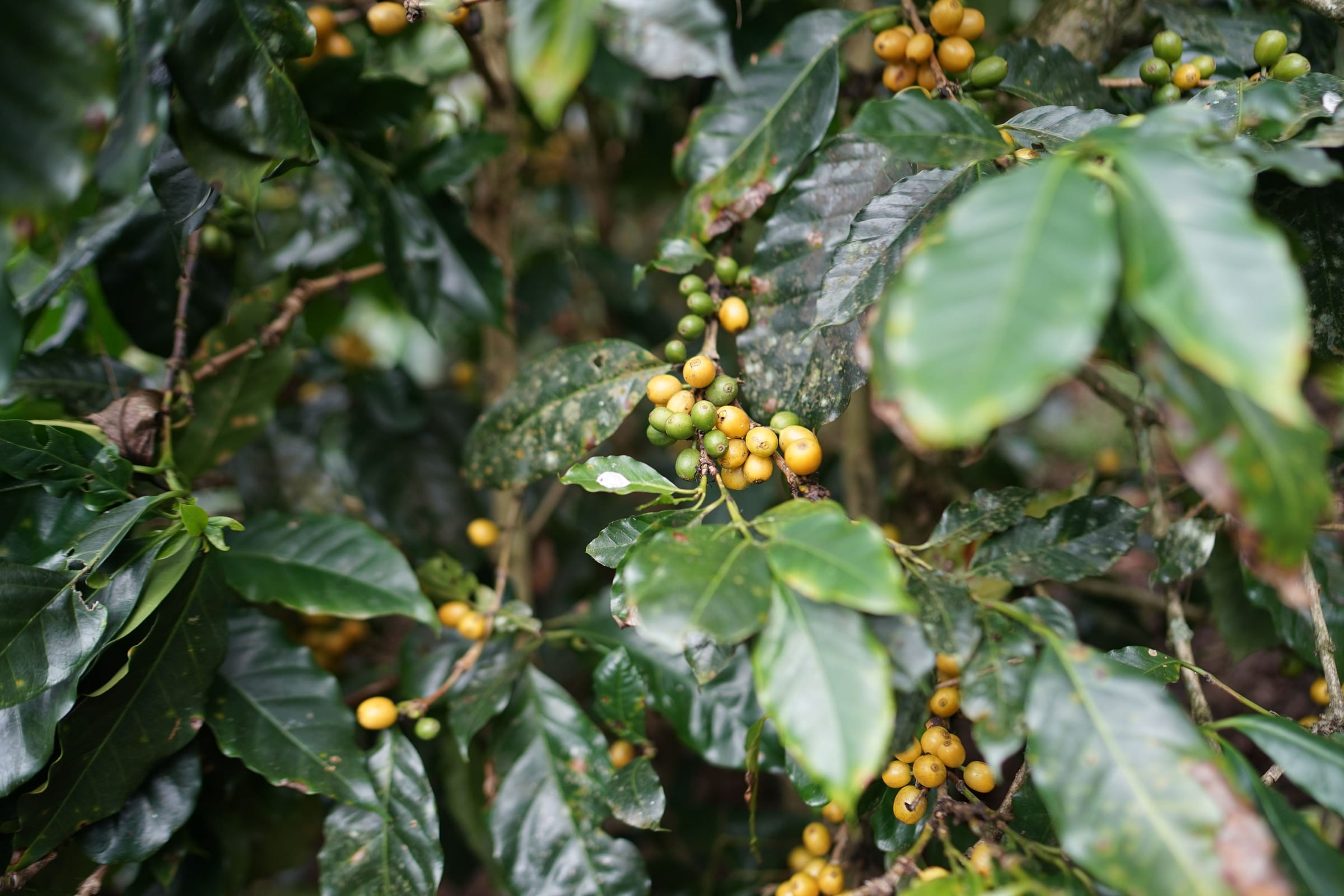
Everything in the cup starts as a seed inside a fruit. The tree takes three to four years to give you anything at all, and then fruits once a year.
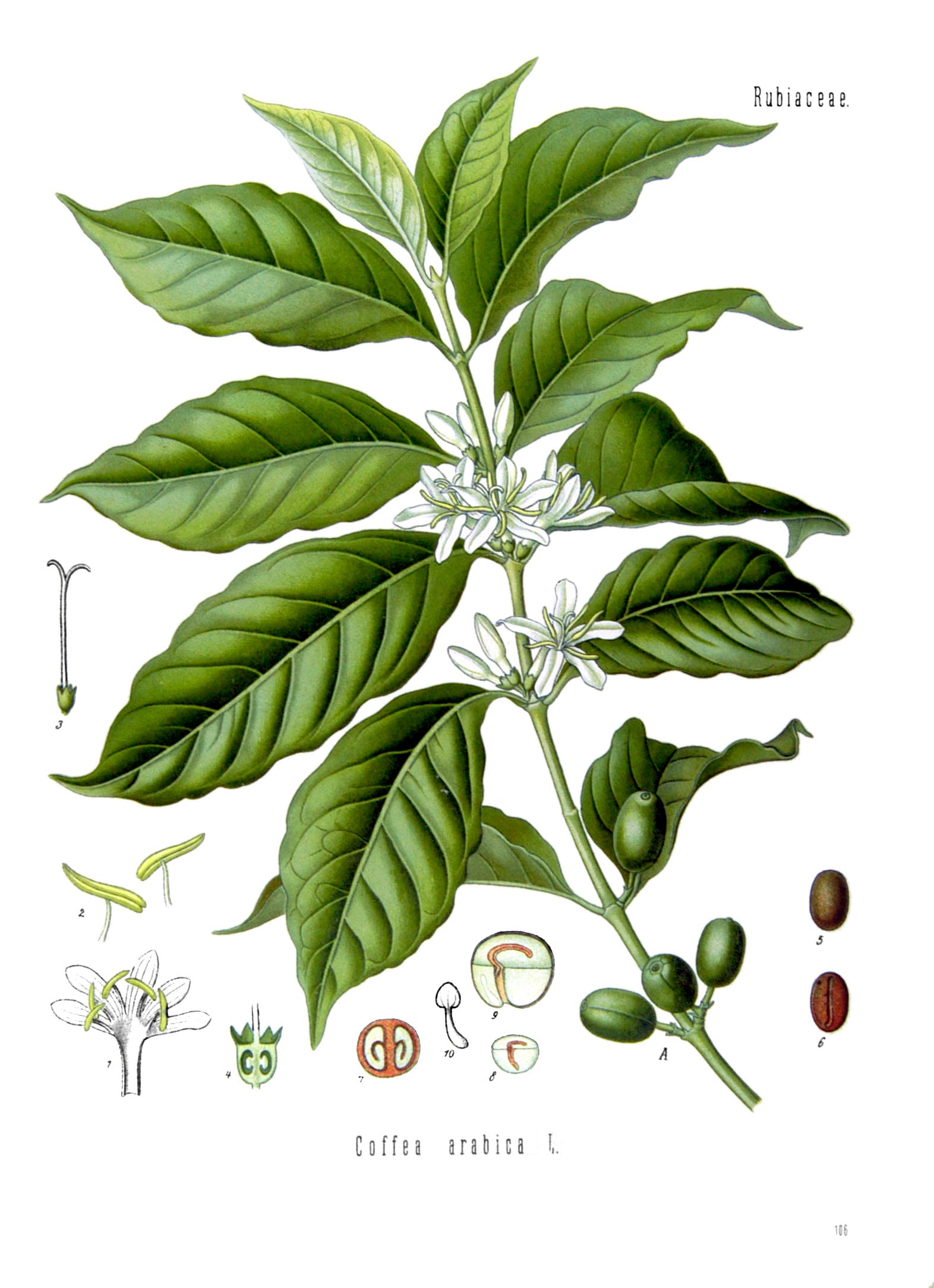
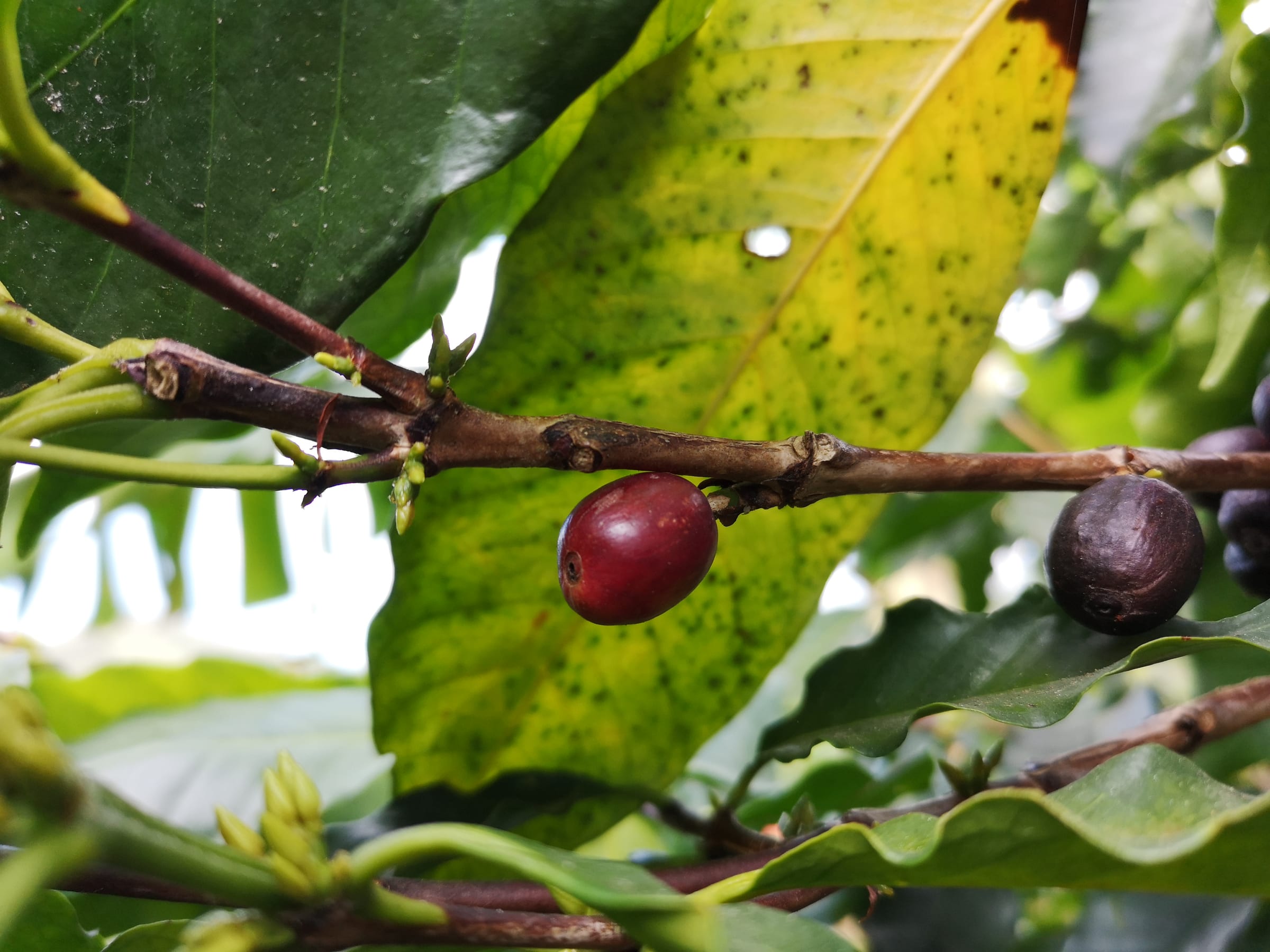
A coffee tree flowers white and jasmine-scented after rain, and the blossom lasts only a few days. What follows is a cherry — green, then yellow, then deep red — that takes six to nine months to ripen. Inside sit two flat-faced seeds; when only one develops it grows round instead, and that is a peaberry.
Almost all coffee is one of two species. Arabica is fussier, needs altitude and shade, and carries more aromatic complexity. Robusta tolerates heat and disease, yields more, and brings roughly double the caffeine with a heavier, earthier taste.
The blossom lasts days. The cherry takes most of a year.
Fire and Water
Two decisions shape a coffee more than the farm does: what happens to the cherry after picking, and how far the roast is taken.
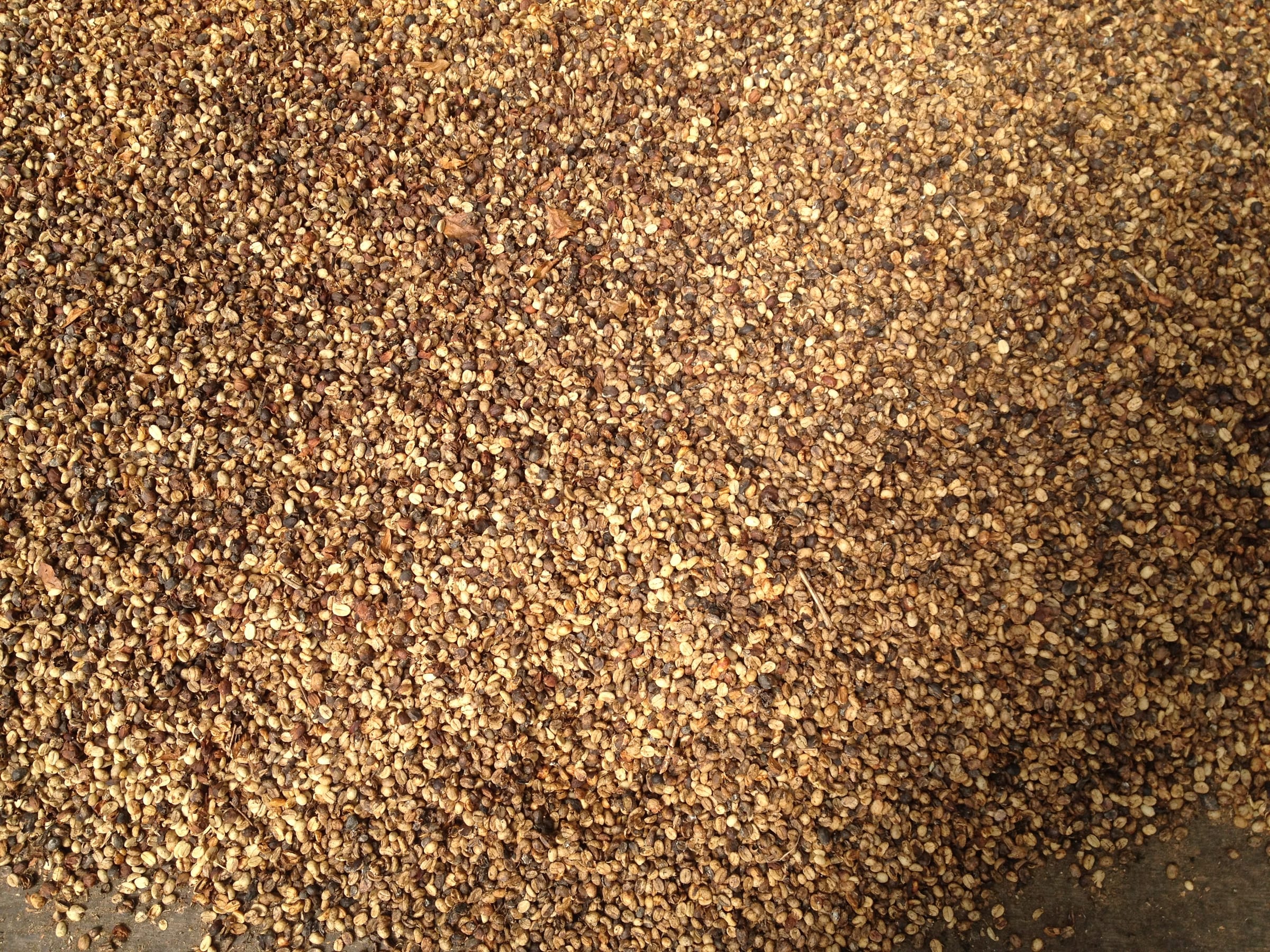
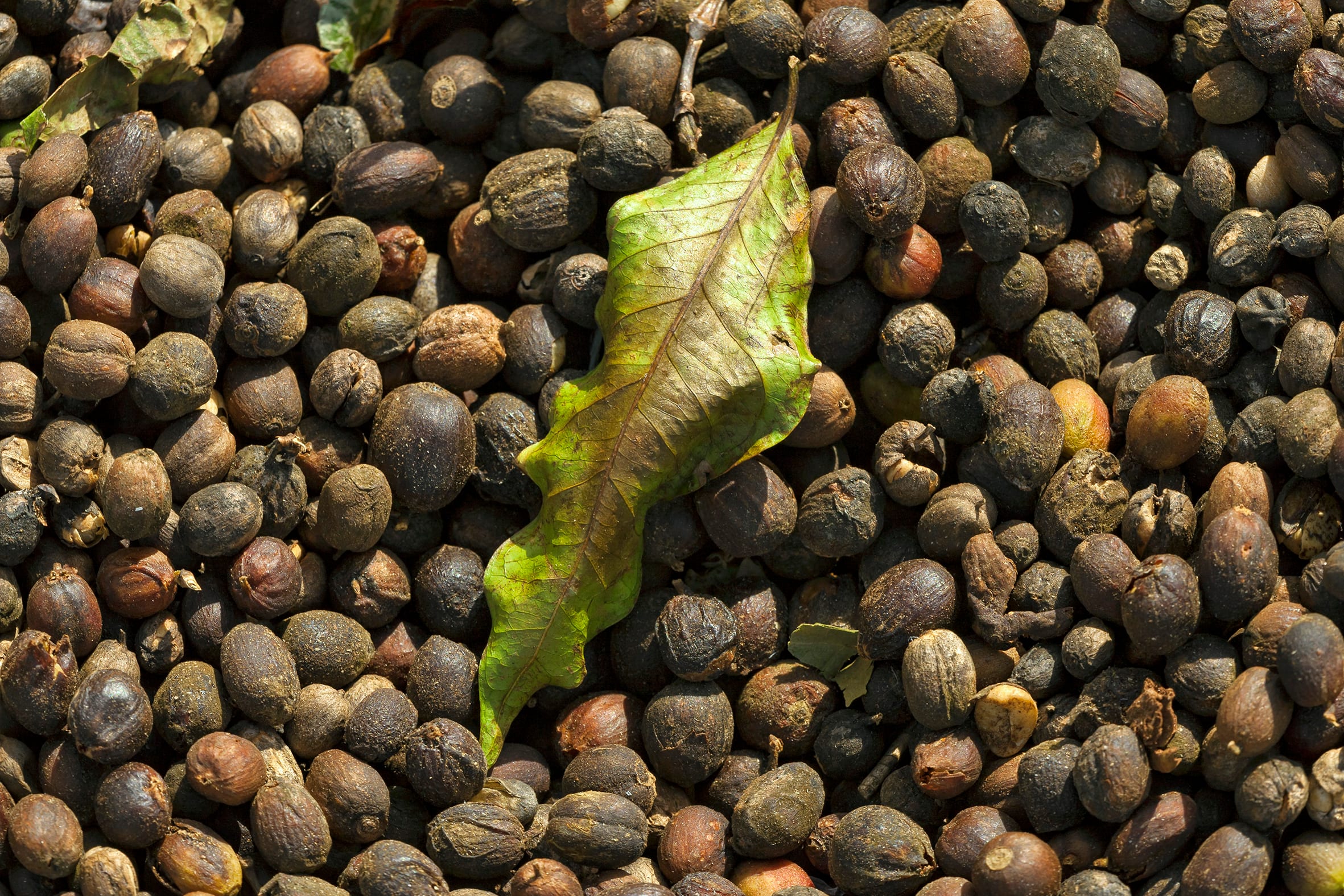
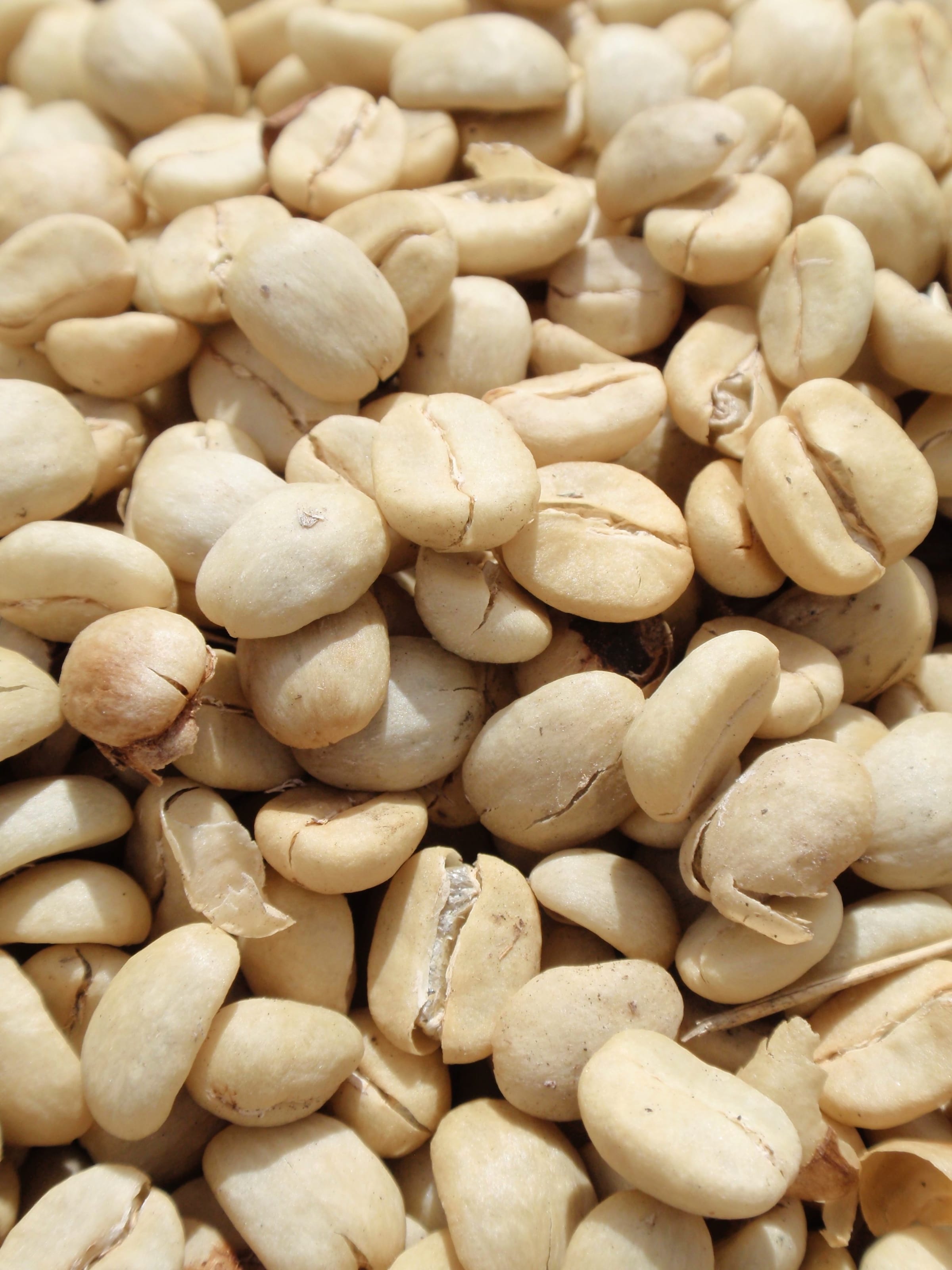
Processing is the business of getting a seed out of a fruit and dry enough to store. Wash the fruit off immediately and you get a cleaner, more acidic cup that tastes of the varietal. Dry the whole cherry in the sun and the fruit ferments against the seed, pushing the coffee sweeter, heavier and more berry-like. Honey processing stops in between, leaving some sticky pulp attached.
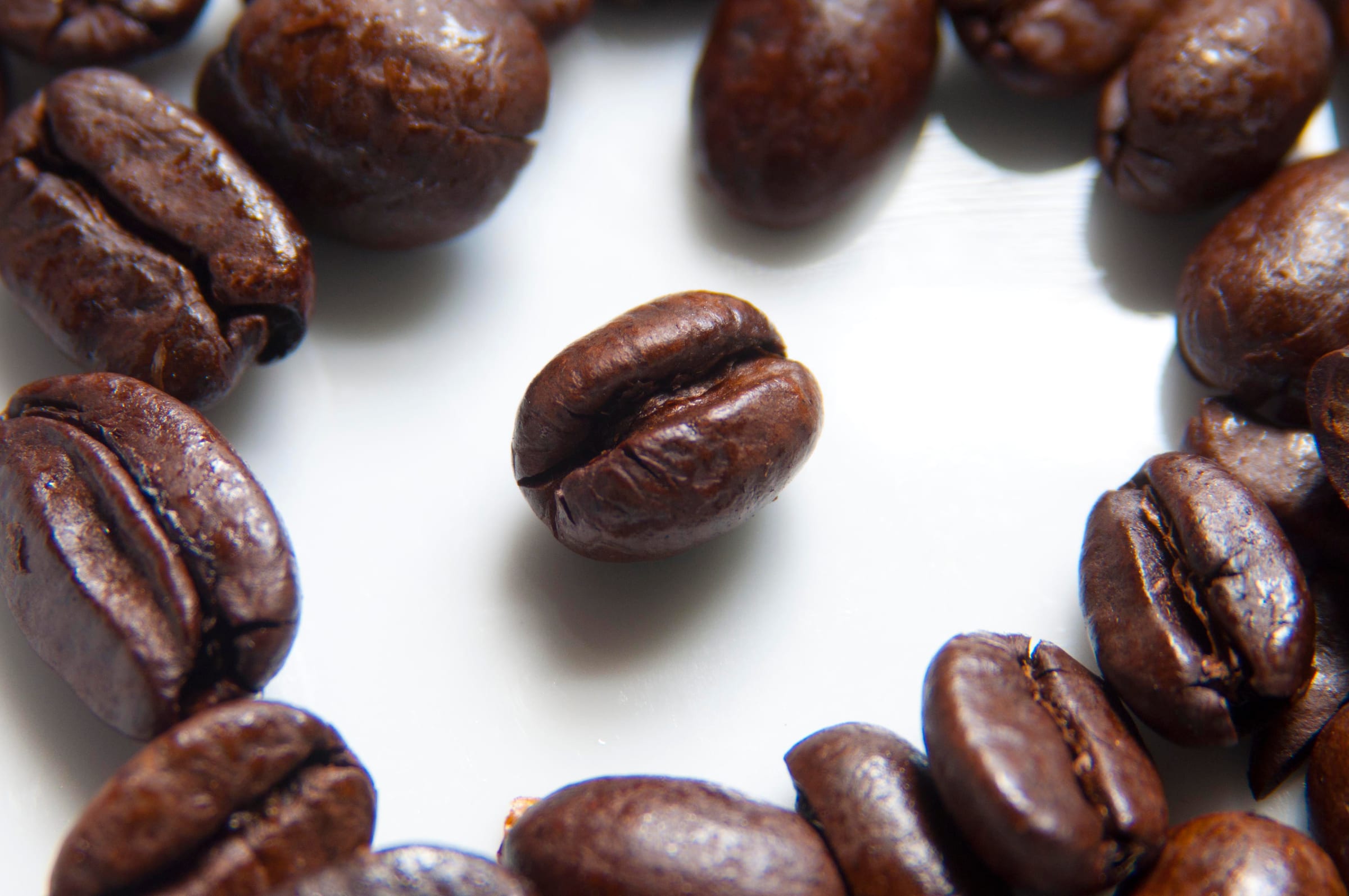
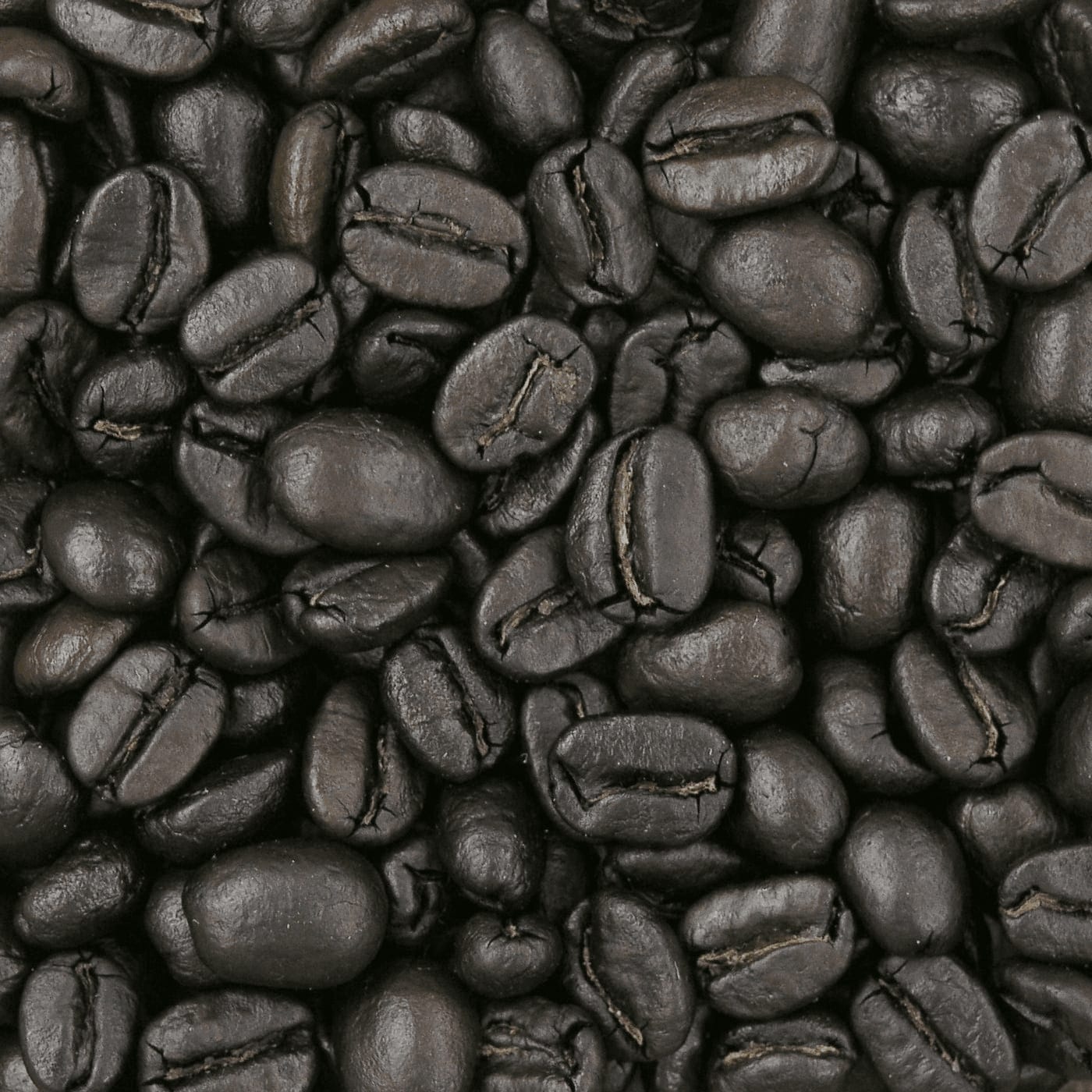
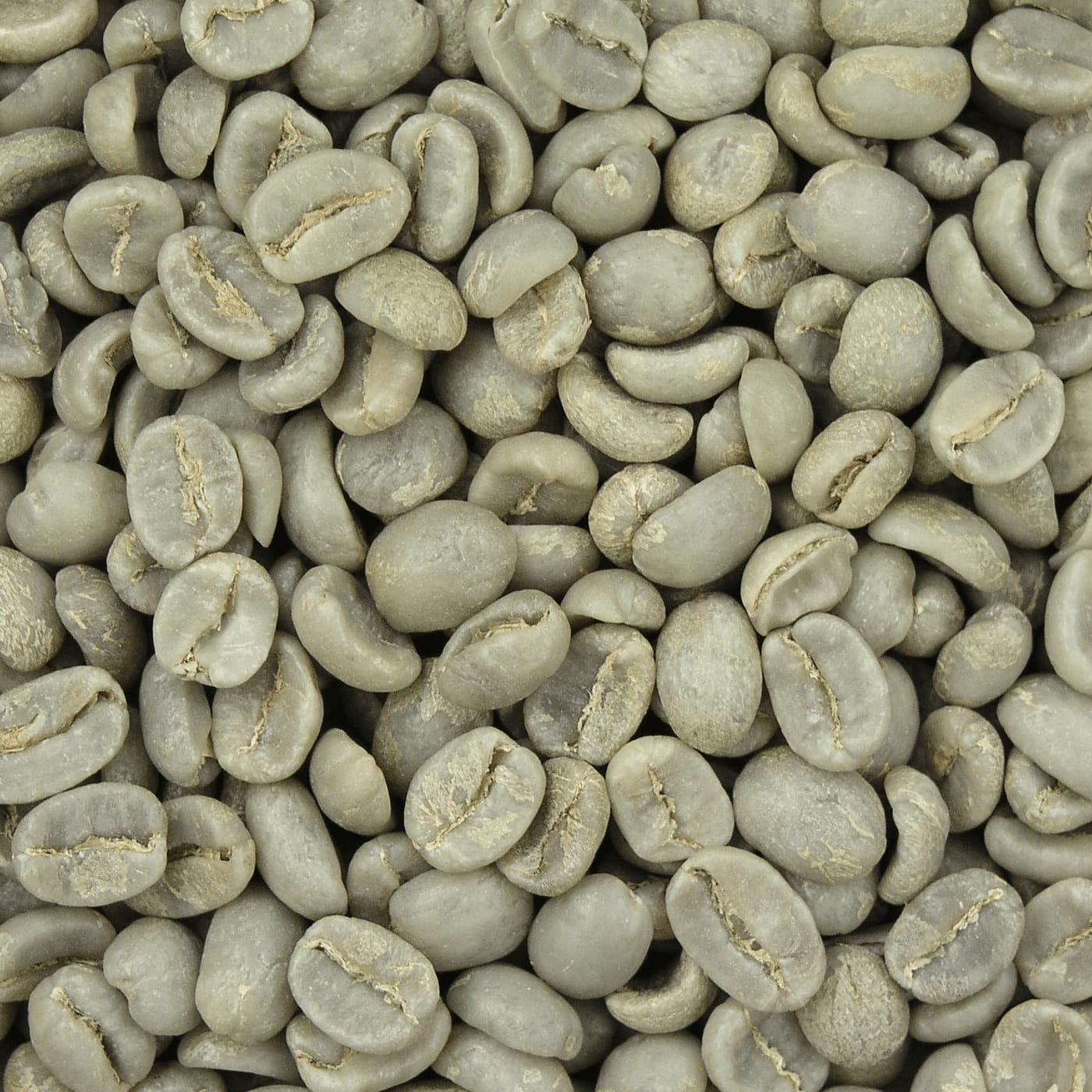
Roasting then converts a grassy, dense green seed into something brittle and aromatic. Sugars caramelise, Maillard reactions build hundreds of new compounds, moisture leaves, and the bean audibly cracks as it expands. Stop early and origin character and acidity dominate. Take it further and roast flavour takes over — heavier body, more bitterness, and progressively less evidence of where it grew.
Light roast tastes of the farm. Dark roast tastes of the fire.
Why It Tastes
Two cups from the same bag can taste completely different. Almost every variable is one you control in the last four minutes.
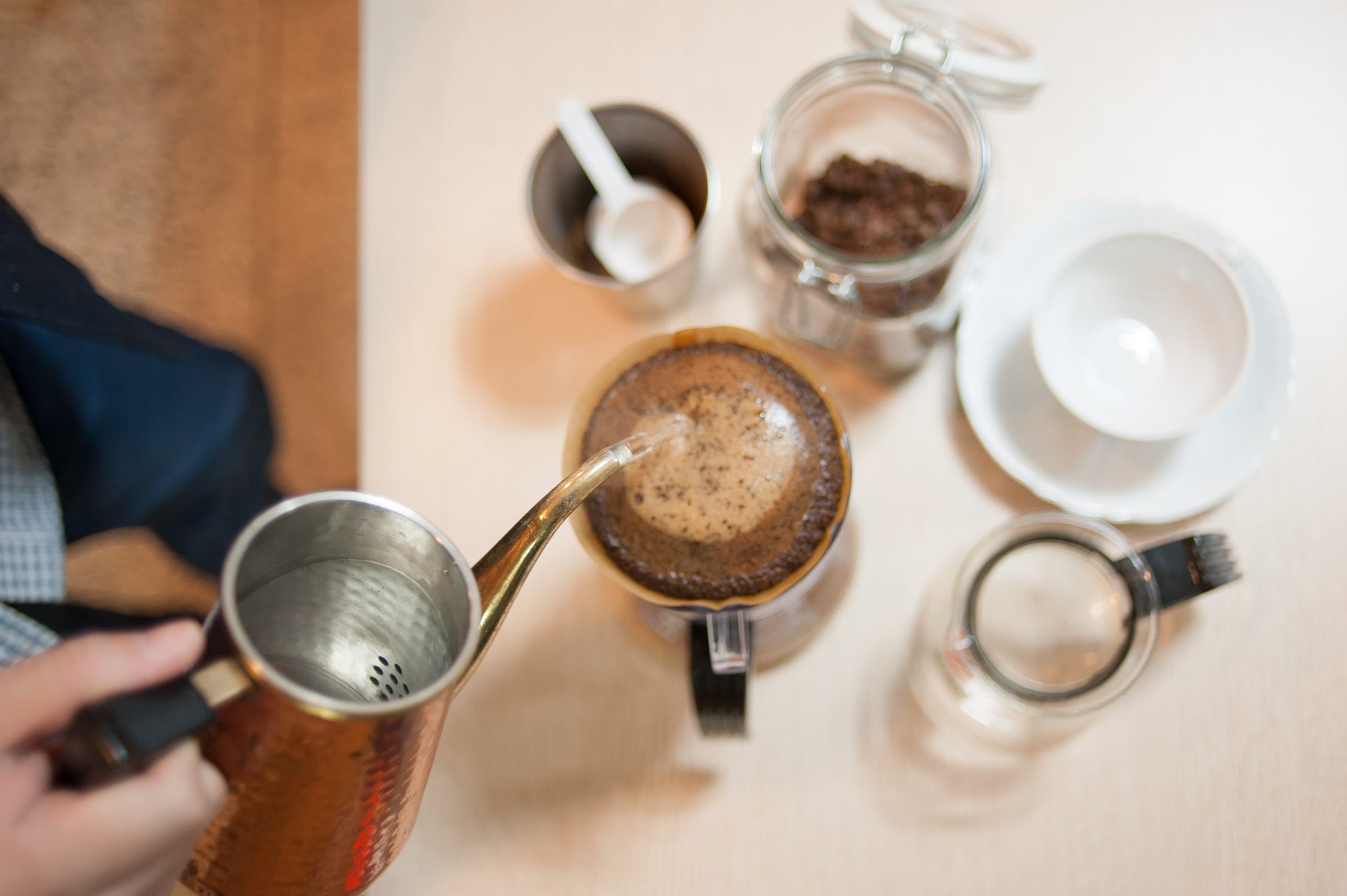
Brewing is dissolving. Hot water pulls acids out first, then sugars, then the bitter and drying compounds last. Take too little and the cup is sour, sharp and thin — under-extracted. Take too much and it turns bitter and hollow. The pleasant middle is narrower than most people expect, and every variable is really a way of steering how much gets dissolved.
Grind size is the strongest lever, because it decides how much surface the water can reach. Finer grinds extract faster and need less time, which is why espresso runs in under thirty seconds and a French press wants four minutes. Ratio, temperature and agitation are the other three dials.
Water is the ingredient nobody thinks about, and it is most of the cup by weight. Very soft water extracts poorly; very hard water mutes acidity and scales your equipment. And a tasting note is not an ingredient — a coffee described as blueberry contains no blueberry, only aromatic compounds your brain files near it.
Sour means too little. Bitter means too much.
Extraction
Immersion or percolation, four minutes or twenty-five seconds, boiling or just off it.
Every method is an argument about extraction.
How much of the seed to take, and how fast — that is the only question a brewer ever answers.
Twelve Centuries
That is where coffee came from, and why it tastes the way it does.
Now make your own
Methods, faults, ratios. The rest of this page is practical.
Brewing
Every method is the same argument in different equipment: how much of the seed to take, and how fast. Figures are starting points, not gospel — there is no single correct recipe.
French press
- Grind
- Coarse
- Ratio
- 1:15 – 1:17
- Time
- 4 min
- Water
- 93–96°C
Full body, rounded, some sediment — the mesh passes oils a paper filter would trap.
Watch out Plunging hard pushes fines through. Press slowly, and pour it all out — coffee left in the pot keeps extracting.
AeroPress
- Grind
- Medium-fine
- Ratio
- 1:14 – 1:16
- Time
- 1–2 min
- Water
- 80–90°C
Clean but weighty; the paper filter gives clarity, the short steep keeps sweetness.
Watch out Almost every variable is in play at once. Change one per brew or you learn nothing.
V60
- Grind
- Medium-fine
- Ratio
- 1:15 – 1:16
- Time
- 2:30 – 3:30
- Water
- 92–96°C
Bright and articulated; separates acidity and aromatics more than any other method.
Watch out Pour rate is the recipe. Rushing floods the bed and the water channels past the coffee instead of through it.
Chemex
- Grind
- Medium-coarse
- Ratio
- 1:15 – 1:17
- Time
- 3:30 – 4:30
- Water
- 93–96°C
Very clean and tea-like. The thick filter removes most oils and fines.
Watch out That thick filter slows flow, so grind coarser than a V60 or it stalls.
Espresso
- Grind
- Fine
- Ratio
- 1:2 – 1:2.5
- Time
- 25–32 s
- Water
- 92–95°C
Concentrated and syrupy, with crema from dissolved CO₂. Intensity, not more caffeine per serving.
Watch out Grind, dose and tamp all change the flow rate. Fix the dose first, then adjust grind alone.
Moka pot
- Grind
- Fine-medium
- Ratio
- 1:7 – 1:10
- Time
- 4–5 min
- Water
- stovetop
Strong, low-acid, chocolatey. Concentrated but not espresso.
Watch out It runs at roughly 1–2 bar, not the ~9 of an espresso machine — so it cannot make espresso. Pull it off the heat when it starts to sputter.
Cold brew
- Grind
- Coarse
- Ratio
- 1:8 concentrate
- Time
- 12–18 h
- Water
- room or fridge
Sweet, heavy, very low acidity. Dilute to taste before drinking.
Watch out Longer is not better past about 18 hours; it turns woody. Strain properly or it stays gritty.
Japanese iced
- Grind
- Medium-fine
- Ratio
- 1:15 (half as ice)
- Time
- 3 min
- Water
- 93–96°C
Brewed hot straight onto ice. Keeps the aromatics cold brew loses.
Watch out The ice is part of the water weight, not an addition — count it or the result is watery.
Cezve / Turkish
- Grind
- Powder-fine
- Ratio
- 1:10
- Time
- 3–4 min
- Water
- brought up slowly
Unfiltered and intense, with grounds settling in the cup. Often spiced with cardamom.
Watch out Never let it boil over. Bring it up slowly and lift it as the foam rises.
Phin
- Grind
- Medium-coarse
- Ratio
- 1:6 – 1:8
- Time
- 4–5 min
- Water
- 95°C
Slow gravity drip, dense and dark. Traditionally served over condensed milk.
Watch out The filter press sets the drip rate. Too tight and it stops; too loose and it floods.
South Indian filter
- Grind
- Fine
- Ratio
- 1:6 – 1:8
- Time
- several hours
- Water
- just off boil
Thick decoction, traditionally with chicory, mixed with hot milk and sugar.
Watch out The decoction is a concentrate, not a drink. It is meant to be cut heavily with milk.
11 methods · scroll to move sideways
My coffee tastes…
Pick the fault. Then change one thing and brew it again — change two and you will not know which one worked.
Ratio
Weigh the coffee and the water. It is the single change that improves most people’s coffee, and it costs nothing but a scale.
There is no perfect coffee.
There is only the cup that is right for you, and the small number of variables that get you there.
Weigh it. Change one thing. Taste it again.